
Right beginnings.
Planting stock, host plants and drainage planned around the site’s growing conditions.
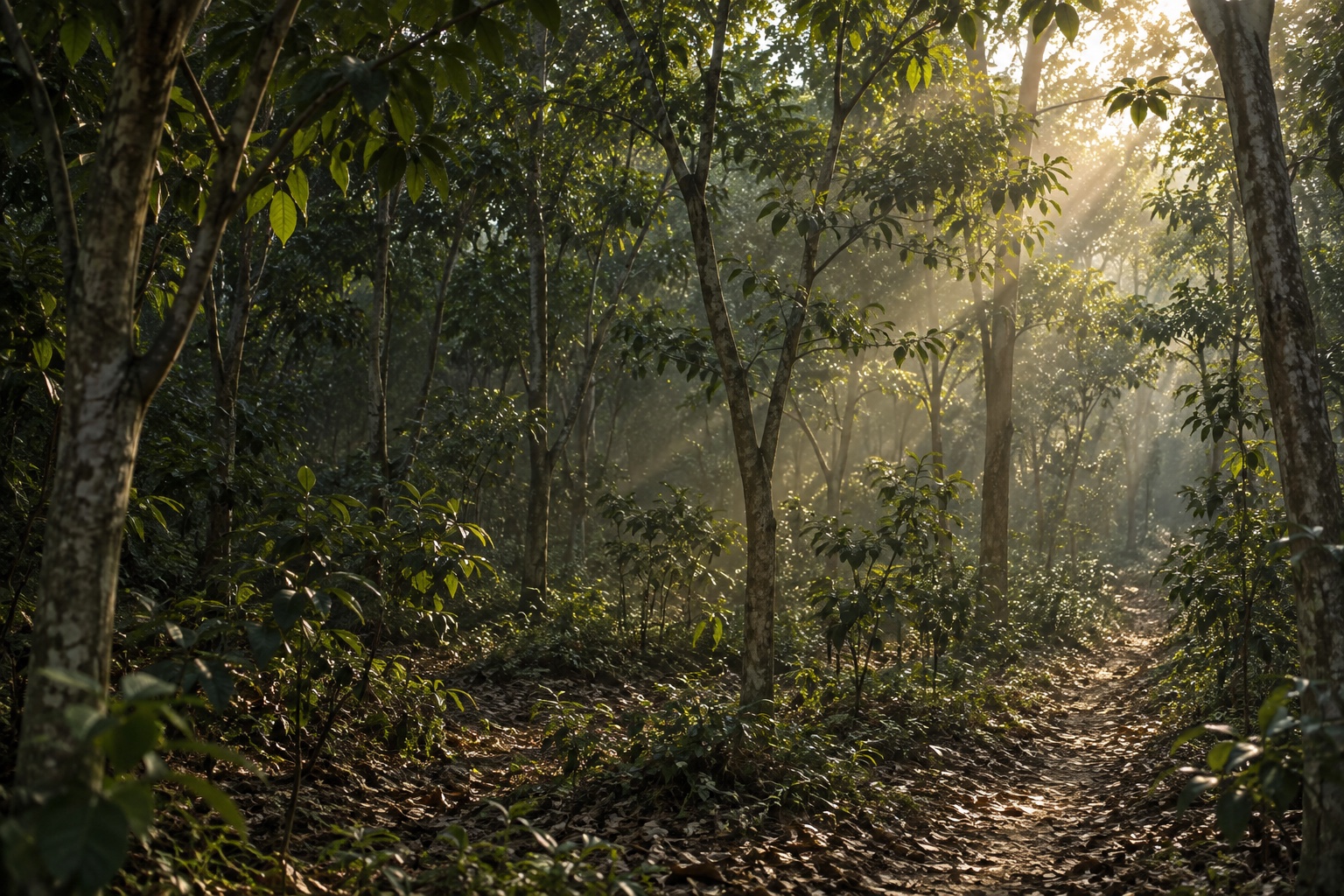
Managed White Sandalwood plantations
01 / Managed sandalwood plantations
Heartwood Plantations offers managed White Sandalwood plantations in Tilari, Maharashtra, with a planned 15-year cultivation journey.
Planting, host selection, irrigation, tree care and harvest assessment—brought together in one management approach. We call it Pure Growth: a passion for cultivation, with a long view of the tree, the land and their potential value.
We manage the plantation. Agricultural land is purchased separately through Tilari Estates.
Meet the tree at the heart of it allPlanting stock, host plants and drainage planned around the site’s growing conditions.
Agronomic guidance, irrigation and plant-health monitoring through each stage of growth.
The potential of a managed sandalwood crop, with land retained as a separate asset.
Beneath the bark / A closer look
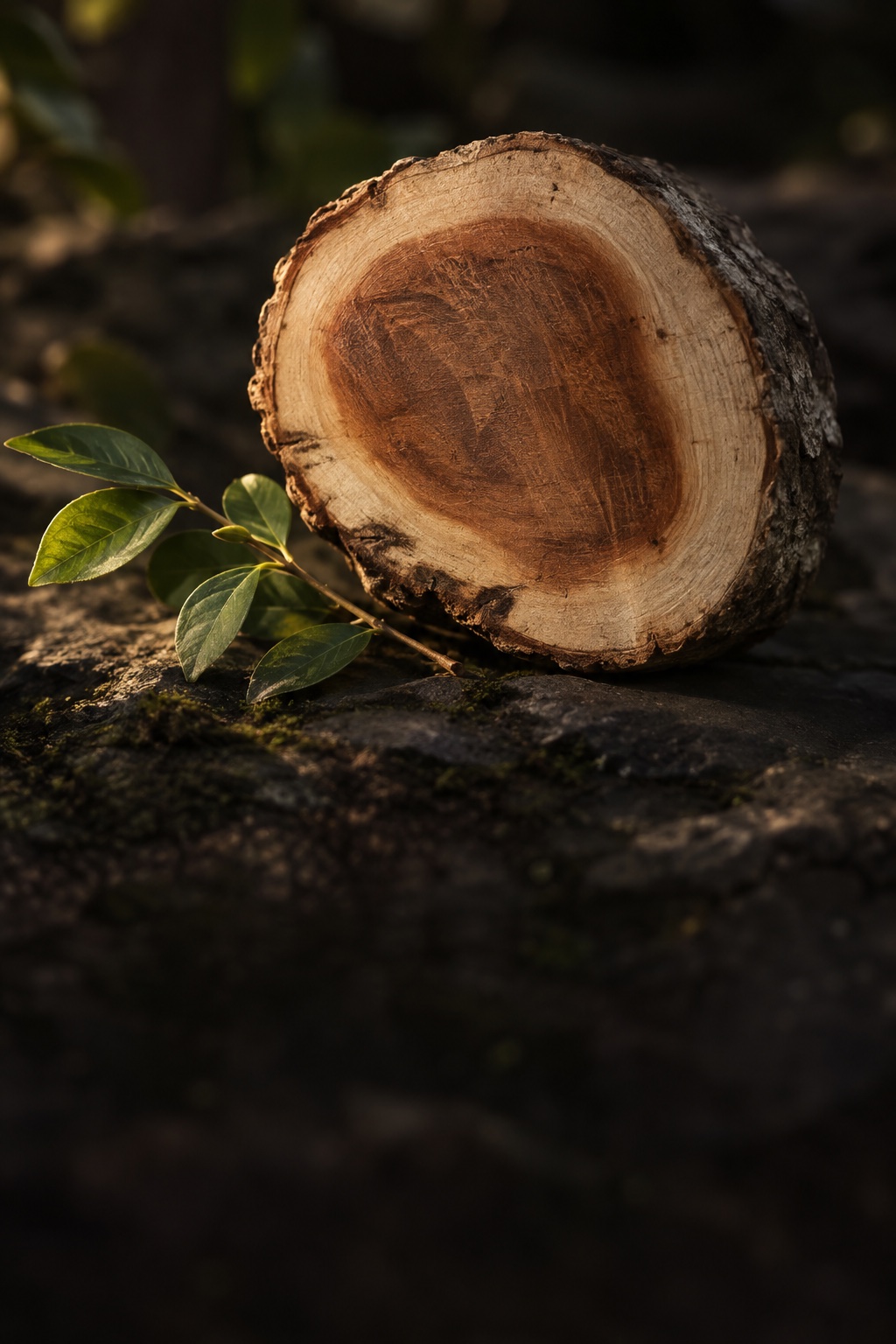
02 / The tree
Unassuming on the outside.
Extraordinary within.
White Sandalwood carries its character in its fragrant heartwood. Slowly, beneath the bark, the tree develops the aromatic wood prized in perfumery, craft and cultural traditions.
The heartwood gives sandalwood its character—and Heartwood its name.

Santalum album is a root hemi-parasite. It draws part of its water and nutrition through host plants. A thoughtful host system is fundamental to the plantation design.
Heartwood development and oil content vary with genetics, growing conditions and tree health. Our planning horizon is 15 years; harvest readiness requires assessment of the actual trees.
Verified planting stock, well-managed hosts, drainage, appropriate irrigation and plant-health monitoring work together. No cultivation method can remove biological or market risk.
The wider perspective / Sandalwood demand
Quality, buyer requirements and lawful trade shape a sandalwood sale. Future demand and prices depend on the market at harvest.
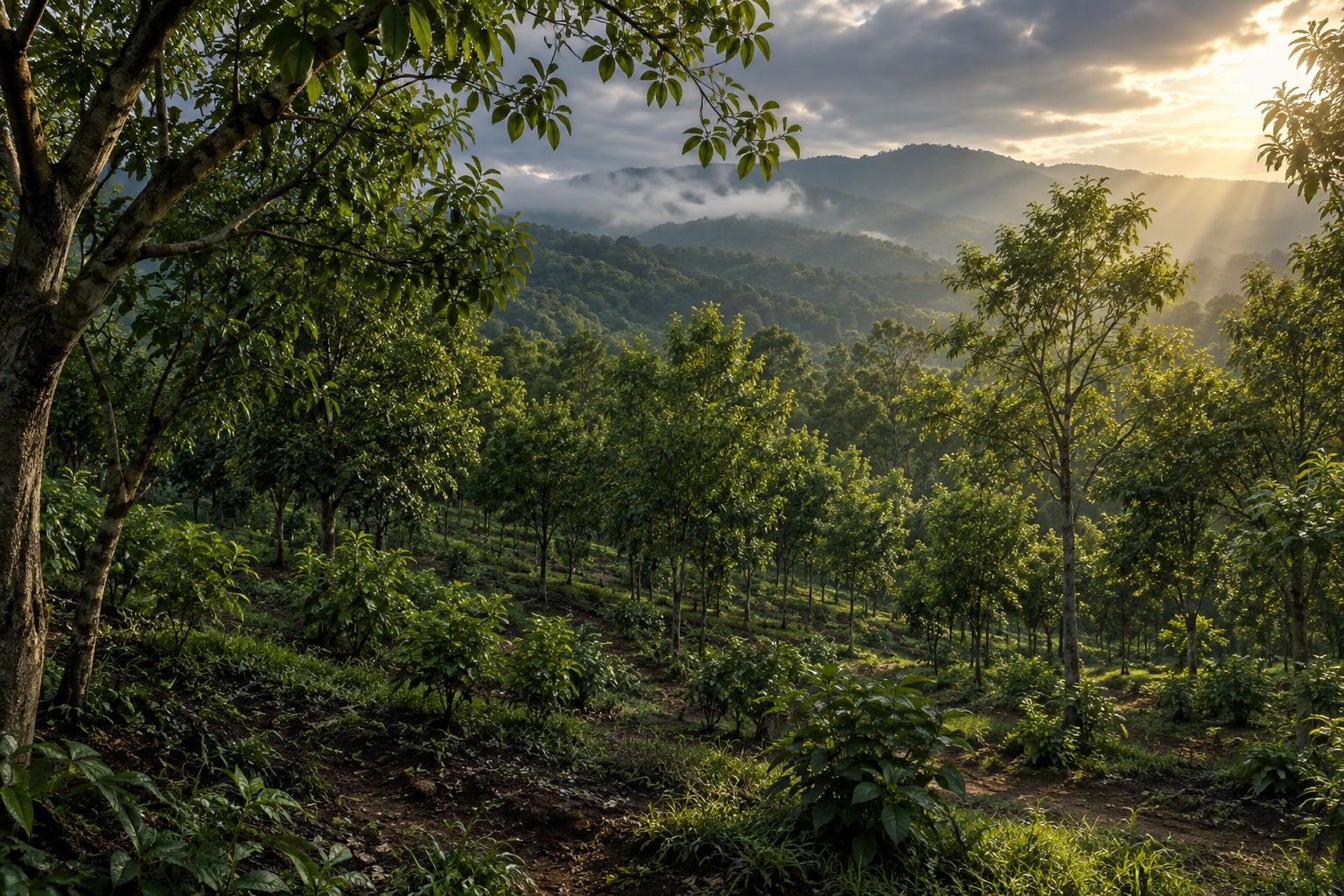
03 / Tilari, Maharashtra
Tilari, in Maharashtra’s Konkan region.
The setting for our planned White Sandalwood plantation.
AI plantation study · not a photograph of Tilari Estate
The approximate estate scale
described in the project brief.
Soil from different sections of the land has been tested for sandalwood feasibility.
The site approach
The project brief records soil testing across different sections of the land to assess sandalwood suitability. In a high-rainfall setting, that potential depends on planned drainage, suitable hosts and dependable water management.
Work with the natural contours. Plan water flow to avoid stagnation. Combine controlled drip irrigation with dry-season contingency planning. Match host selection and ongoing care to local conditions.
*Approximate gross estate area, not confirmed net plantable area or current availability. Plot boundaries and saleable area require survey and documentation.
Heartwood Plantations / Our projects
Managed sandalwood cultivation.
Site-specific planning for each project.
The plantation journey explored on this website. Land purchase is separate, through Tilari Estates; Heartwood provides plantation management.
Explore the Tilari modelA future Heartwood project. Location-specific scope, timelines and commercial details will be shared when confirmed.
Not open for selectionA future chapter in our plantation story. Details and availability remain to be announced.
Not open for selection04 / The 15-year journey
From planting to harvest assessment.
Explore the five stages of the plan.
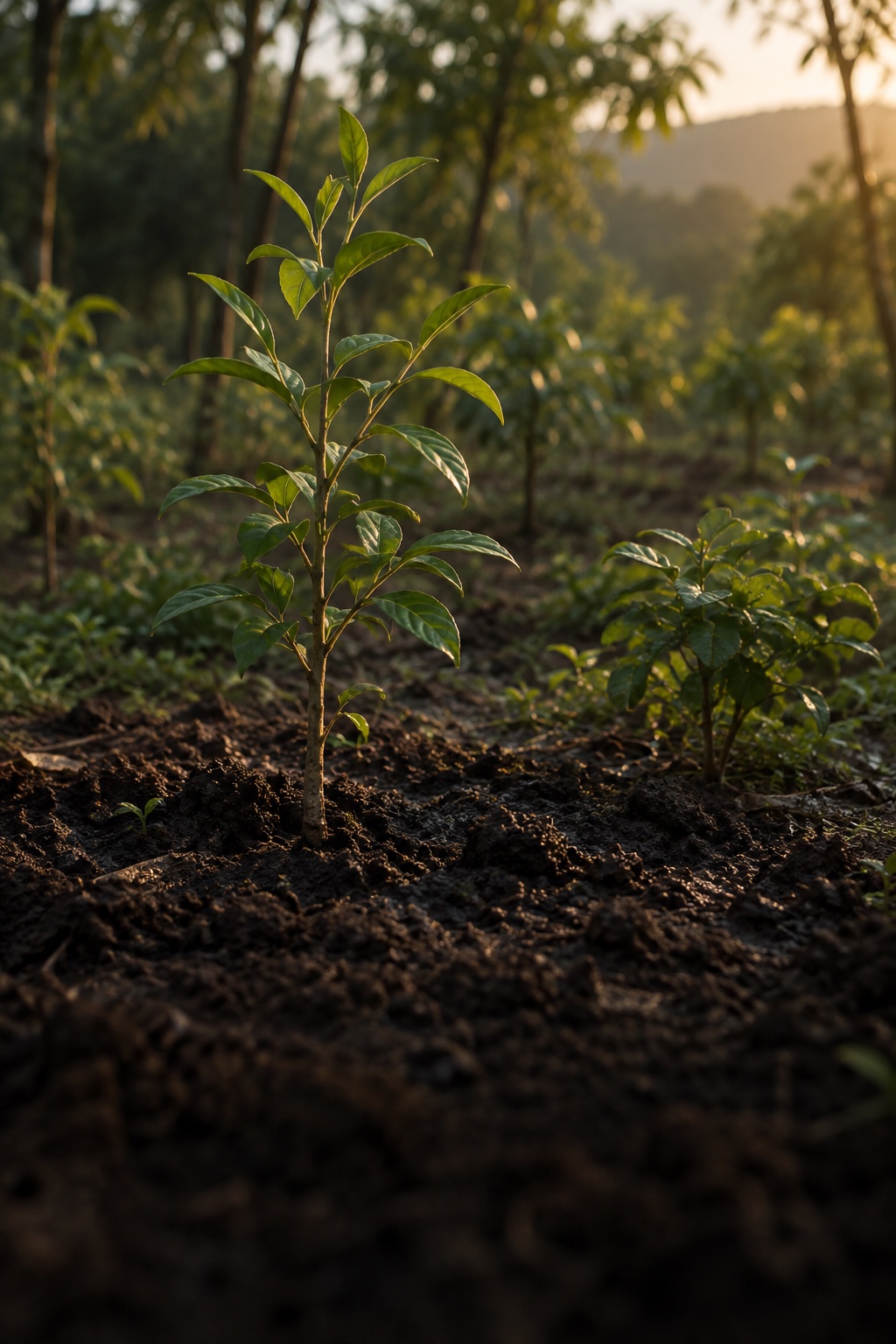
Establish · AI study, not an actual growth record
The first roots / Years 1–2
Prepare drainage and irrigation, verify planting stock and establish sandalwood with its hosts. Early monitoring and timely replacement give the plantation its foundation.
Soil · saplings · host relationships
An indicative management sequence, not a biological guarantee. Harvest timing depends on maturity, permissions and market conditions. The signed agreement governs the 15-year term and any exit rights.
05 / Our methodology
Planting stock, host systems, drainage and ongoing care.
The practical work behind each stage of growth.
Understand soil and natural contours, route drainage and plan seasonal water availability before planting. Monitor conditions as the site develops.
Assess sapling provenance and vigour. Plan sandalwood spacing with room for host roots and light. Final density follows the agreed agronomic layout.
Design temporary and permanent host relationships, guided by site-specific advice. The Tilari agronomic brief identifies Casuarina and Pongamia as proposed permanent hosts.
Use controlled irrigation, seasonal pruning and regular plant-health observation. Adapt inputs to the tree and the conditions, supported by local agronomy and specialist review.
Plan layered security and keep records of the plantation’s development. Assess heartwood and readiness before harvest, with the required permissions and documented sale process.
Agri-tech / Care, made visible
Proposed mapping, monitoring and records,
with agronomists interpreting the results.
Proposed digital parcel maps and planting registers connect sandalwood, host plants and establishment records to the relevant owner’s land.
Planned soil and water observations, irrigation records and repeat photographic checks help agronomists track conditions across seasons.
Plant-health logs, survival checks and recorded interventions support timely review of nutrition, pests, disease and replacement needs.
Proposed periodic growth reports, parcel-level inventory and documented harvest and sale records support transparent stewardship.
This is the proposed monitoring approach, not a claim that a sensor network, drone programme or customer dashboard is already deployed. Tools, reporting cadence, access and responsibilities must be confirmed in the management scope.
06 / The advisory panel
International perspective. National experience.
Regional science. Day-to-day care.
01 / Global perspective. Cultivation experience.
Commercial forestry · Western Australia
More than three decades in commercial forestry inform Grant Pronk’s approach to plantation design and long-horizon management. His supplied biography describes leadership of GP Forestry and almost two decades with Western Australia’s Forest Products Commission.
His experience spans planting stock, silviculture and inventory methods, bringing a commercial forestry perspective to the plantation’s technical decisions.
Tilari focus: Plantation benchmarks, species and stock selection, management protocols and technical review.
Practical cultivation · Raichur, Karnataka
Dr. Kavitha Mishra brings hands-on sandalwood cultivation and agricultural entrepreneurship to the panel. Her supplied biography describes the development of an eight-acre, multi-crop plantation in Raichur, Karnataka.
Her practical experience with host plants, mixed cultivation and ongoing care connects plantation planning with the realities of growing trees on the ground.
Tilari focus: Sapling sourcing, host strategy, planting design and cultivation review, informed by her assessment of Tilari.
02 / Regional science. Daily stewardship.
Ph.D. Forest Genetics · Konkan expertise
Dr. Ajay Rane’s supplied biography records a Ph.D. in Forest Genetics and an academic association with the College of Forestry, Dapoli. His regional scientific perspective connects plant genetics with local growing conditions.
The proposed advisory scope brings research-led scrutiny to soil interpretation, planting material, agroforestry design and plant-health observations.
Tilari focus: Genetic stock, site suitability and scientific review of growth, nutrition and plant health.
M.Sc. Agriculture · Sindhudurg agronomy
Prof. Mahesh Dharmapurkar’s supplied biography records an M.Sc. in Agriculture and academic leadership at C. S. College of Agri Business, Kudal, Sindhudurg. His experience is grounded in the region’s agricultural conditions.
The proposed role connects specialist recommendations with everyday operational decisions, from nursery management and irrigation to workforce coordination and cultivation records.
Tilari focus: Day-to-day agronomy, labour coordination, irrigation, nursery care and implementation of the advisory team’s recommendations.
Credentials and proposed roles reflect the supplied advisory brief. Final appointments, engagement scope and public biographies remain subject to confirmation. Expertise icons are shown until authorised portraits are supplied.
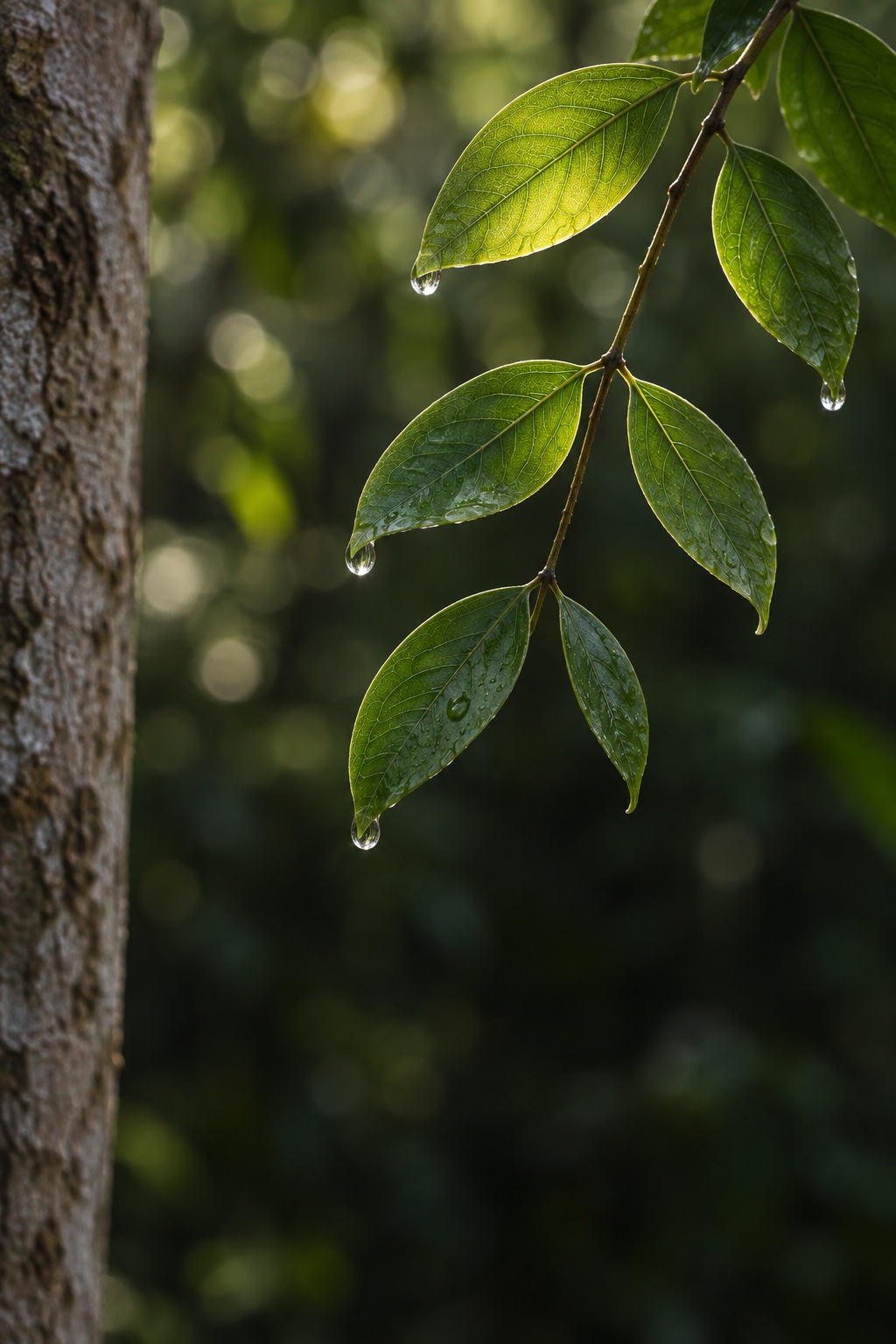 AI botanical study · illustrative, not site photography
07 / Growing responsibly
Water, soil and host plants are part of the cultivation plan. Here is how we approach each.
Plan drainage and controlled irrigation around seasonal conditions and root health.
Build host relationships, maintain soil health and use inputs with agronomic discipline.
Track cultivation practices and plant health over the management term.
These are stewardship commitments. No quantified carbon removal, carbon credits, carbon-neutral status or biodiversity certification is claimed.
Growing trees / Understanding carbon
Growing trees can help take carbon dioxide out of the air. Carbon credits put a value on a checked climate benefit—not simply on planting a tree.
As trees grow, they take in carbon dioxide from the air. They store some of that carbon in their wood and roots.
Independent experts measure the extra climate benefit and check that it lasts. They also account for tree losses and harvesting.
If the project meets the carbon programme’s rules, credits can be issued and sold to buyers. They are not a payment for every tree.
1 creditrepresents1 tonne
A carbon credit represents a climate benefit equal to reducing or removing one tonne of carbon dioxide.
Carbon credits could be another source of income if a project qualifies and its credits are sold.
For Heartwood, no carbon credits or income are confirmed. No carbon-credit income is included in our calculator. Any future costs and income-sharing terms would need a separate agreement.
Owning a plantation does not automatically cancel out your own emissions.
India’s 2019 average was 1.8 tonnes of greenhouse gases per person per year, measured in carbon-dioxide terms. At that same rate for 70 years, the total would be 126 tonnes.
This is a rough example, not your personal footprint. It assumes emissions stay the same and uses 70 years just for illustration.
Where the India figure comes fromUse the same carbon-dioxide measure as the example. This is your input, not a Heartwood estimate. The result does not show how many credits could be earned.
08 / Ownership & stewardship
Three indicative parcel sizes.
Land purchase and plantation management, separately agreed.
Heartwood introduces customers to Tilari Estates, the land company, for the separate purchase of agricultural land for plantation. Heartwood does not sell the land. Verify the registered seller, title, eligibility, boundaries, price and registration independently.
A separate agreement with Heartwood Plantations LLP defines establishment, cultivation, management, costs, the planned 15-year term and harvest sharing. Heartwood is the plantation company; the land purchase and management arrangement are legally distinct.
Parcel sizes are indicative and subject to survey and availability. The executed agreements must establish participation, transfer and early-termination terms. Plantation charges are separate from land costs and may change. No legal entitlement, liquidity, return or tax treatment is promised by this website.
The business model / Your parcel, your trees
Revenue follows the trees on your own parcel.
Not a pool of other owners’ harvests.
| Parcel | One-time establishment | Annual maintenance | 15-year service total* |
|---|---|---|---|
| ¼ acre | ₹2 lakh | ₹25,000 | ₹5.75 lakh |
| ½ acre | ₹3.5 lakh | ₹35,000 | ₹8.75 lakh |
| 1 acre | ₹5 lakh | ₹60,000 | ₹14 lakh |
Indicative rates, subject to change. *Setup plus 15 annual payments at unchanged rates; no escalation assumed. Land price, statutory charges, taxes and any additional costs are separate. Obtain the current written quotation and agreed scope.
09 / Explore the possibilities
Change the assumptions.
See what shapes the outcome.
An illustration, never a promise. Future yield, prices and land values are uncertain. These outputs are not guaranteed returns, a valuation or investment advice.
Your illustrative year-15 outcome
¼ acre01 / Plantation harvest
Your 65% harvest share, after selected harvest deductions. Land costs and taxes are separate. The cost basis includes future maintenance, not just the initial payment.
02 / Land retained
An unsold asset, not cash received. Land purchase remains a separate transaction from plantation management.
Together / Plantation + land
Harvest proceeds + retained land value, not a combined cash payout. All percentages show total change over 15 years, not annual returns. Tax, inflation, financing, fee increases and transaction charges are not included.
Land value / Now to year 15
Land figures are historical references, not a current quotation from Tilari Estates. Plantation and maintenance charges are indicative and may change. Fifteen annual payments are assumed without escalation. The final line excludes land acquisition, registration, stamp duty, taxes and other charges: it is not net investment profit. Confirm the full current cost sheet.
Harvest = acres × plantable fraction × planting density × survival × kg per surviving tree × future ₹/kg × (1 − selected deduction rate) × 65%.
Land = land-only purchase reference × (1 + annual change)15. The combined value adds customer harvest proceeds to retained land value; it does not assume the land is sold.
Percentage change = (final value − cost basis) ÷ cost basis × 100. Plantation basis = setup + 15 annual maintenance payments. Land basis = land-only purchase reference. Combined basis = both cost bases. These simple 15-year comparisons are not annualised returns or IRRs and do not adjust for the timing of maintenance payments.
Illustration ready.
Pessimistic / Realistic / Best use 240 / 280 / 300 trees per net acre, 80% / 85% / 100% survival, 15 / 18 / 20 kg per surviving tree and ₹20,000 / ₹25,000 / ₹30,000 per kg. All begin at 100% plantable area and zero additional harvest fees. The labels describe planning cases, not probabilities, floors or ceilings.
Adjust any input to test a different outcome. Crop proceeds can be zero. Heartwood quantity, quality, future prices and sale timing require actual assessment; no buyer or offtake is promised.
Land-change assumptions are 11% / 13% / 15% annually. They are unverified illustrations, not a valuation. They apply only to the separate land reference, never to plantation charges. Retained land is not cash received.
One-time setup and 15 annual maintenance payments are shown separately from the harvest split. Tax, financing, inflation, fee escalation, transaction costs and carbon-credit income are not modelled. Charges and contractual rights must be confirmed before commitment.
These are company planning assumptions, not an independently commissioned valuation or market report. Climate, disease, theft, regulation and market conditions may materially reduce outcomes. Obtain independent legal, tax and financial advice.
A 15-year perspective / Compare thoughtfully
Explore assumptions, not a ranking.
No asset here is a promised return.
For the selected parcel, the alternative-asset examples start with the same ₹21.90 L land-plus-setup reference and add ₹25,000 at each year-end, matching the modelled annual plantation maintenance outflow.
All three start at the same arbitrary 5% annual rate to avoid suggesting a forecast or a preferred asset. Edit them independently. These are hypothetical nominal calculations, not historical performance, current deposit offers or investment recommendations. Tax, inflation, transaction costs and rate changes are excluded.
01 / Gold
Price exposure rather than a crop. Product structure, storage, transaction costs and liquidity need separate review.
02 / Stocks & equities
Assumes distributions are reinvested. Actual outcomes vary with holdings, volatility, costs and the timing of sales.
03 / Fixed deposits & debt
A simplified compounding example, not a locked 15-year deposit rate. Tenor, reinvestment, issuer and instrument terms matter.
04 / Sandalwood + separate land
Uses your Tilari calculator inputs. No assured yield, harvest date, buyer or liquid exit. Land ownership is separate from Heartwood’s services.
Outputs are year-15 gross values or proceeds, not profits or directly comparable realised returns. Annual contributions buy more of the alternative asset; maintenance pays for plantation care. Sandalwood harvest cash and the assumed unsold land value are intentionally not added together. Lower the crop or land assumptions to explore losses. No carbon income or tax exemption is assumed.
Potential tax-free agricultural income / Subject to validation
India’s Income-tax Act, 2025 lists agricultural income among income not included in total income. Whether a particular plantation receipt qualifies depends on the statutory definition, the actual agricultural activity, who earns the income and the legal arrangement.
Do not assume that land-sale gains, management fees, processed-product income or every payment under a revenue-sharing agreement has the same treatment. Other income, applicable rate calculations, reporting requirements and future law also need review.
Heartwood does not promise tax-free returns. Obtain a written opinion from your own qualified tax adviser for the ownership and management documents before relying on any exemption. The calculator is pre-tax.
Income-tax Act, 2025 · Schedule II10 / Questions, answered
Plantation services, costs and contracts.
The questions to start with.
Heartwood Plantations LLP provides plantation establishment, cultivation and management under a separate agreement. It introduces customers to Tilari Estates for agricultural land purchase but does not sell the land. Verify the land transaction independently; Heartwood’s service agreement defines the plantation scope, costs, term and revenue sharing.
It is the intended management horizon in the brief. The executed agreement must define the commitment, start date, early exit, transfer and termination terms. Do not assume a right to withdraw, transfer or terminate outside those agreed terms. Harvest is subject to actual tree maturity and required permissions.
No. Yield, tree survival, heartwood quality, sale prices, land value and timing are uncertain. The calculator illustrates assumptions only. Crop loss or inability to realise a sale can reduce harvest proceeds to zero. Land may lose value and may be difficult to sell.
Revenue from trees grown on your own parcel is shared 65% with you and 35% with Heartwood. It is not pooled with, or distributed to, owners of other parcels. The signed agreement must confirm the sale process, accounting and any applicable deductions.
Current indicative setup charges are ₹2 lakh for ¼ acre, ₹3.5 lakh for ½ acre and ₹5 lakh for 1 acre. Annual maintenance is ₹25,000, ₹35,000 and ₹60,000 respectively. These rates may change and are separate from land purchase. Inclusions, escalation, taxes and additional charges must be agreed in writing.
Heartwood is a plantation company, not the land company. The end of the plantation-management term does not itself transfer or sell your land. Your rights arise from the separate land purchase and title documents; any continuing plantation obligations follow the management agreement. Future use, conversion, construction or sale remains subject to applicable laws and permissions.
Weather, waterlogging, disease, pests, theft, poor establishment, host performance and uneven heartwood development can affect the crop. Monitoring and management reduce some exposures but cannot eliminate them. No insurance cover is represented unless separately documented in an applicable policy.
Request the current project and cost details, proposed plantation-management agreement and confirmed advisory scope. Separately request land title, survey, eligibility and sale documents from Tilari Estates. Review both arrangements with independent advisers before deciding.
Prepare an enquiry11 / Your next chapter
Ask about cultivation, management
and the proposed terms at Tilari.
White Sandalwood. Expert-led cultivation.
A long view of growth.
PURE GROWTH.